AI in Digital Marketing 2026: Strategy, Tools and Real Business Impact

AI in Digital Marketing 2026: How Artificial Intelligence Is Changing Marketing Strategy
Artificial intelligence is no longer a futuristic concept in marketing.
It has quietly become part of everyday marketing operations.
Businesses are now using AI to analyse data, generate content, automate communication and optimise campaigns faster than any human team could do manually.
For many companies the shift is not optional. The gap between businesses using AI intelligently and those relying only on traditional marketing processes is widening every year.
Understanding how AI fits into digital marketing strategy is therefore becoming essential for any business that wants to remain competitive.
What AI in Digital Marketing Actually Means
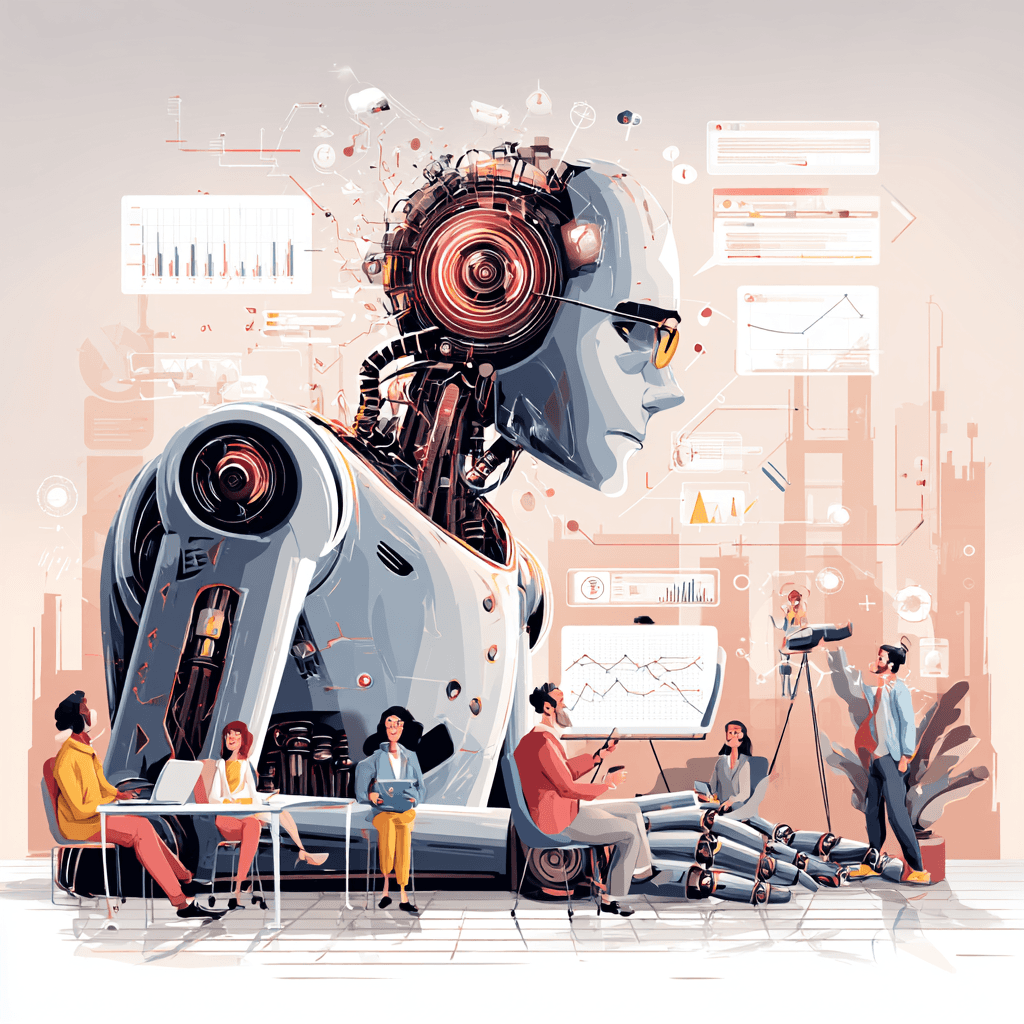
AI in digital marketing refers to the use of machine learning systems and automated data analysis to improve marketing decisions.
Instead of relying only on manual analysis, AI systems process large volumes of data and detect patterns that help marketers optimise campaigns, personalise communication and predict customer behaviour.
Common applications include:
customer behaviour prediction
automated content generation
campaign optimisation
chatbot communication
lead scoring
personalised email marketing
The key point is that AI does not replace marketing strategy. It improves the speed and quality of marketing execution.
Why AI Is Becoming Essential in Modern Marketing
The digital environment generates an enormous amount of behavioural data.
Every search query, website visit, ad click and interaction creates signals that indicate customer intent. Analysing this information manually is almost impossible at scale.
AI systems allow marketers to process this data efficiently and extract useful insights.
This leads to several advantages.
First, businesses can identify which audiences are most likely to convert.
Second, campaigns can be adjusted automatically based on performance signals.
Third, customer experiences can be personalised at scale.
For businesses operating in competitive markets, these capabilities are increasingly important.
The Most Important Applications of AI in Digital Marketing
Predictive customer analytics
One of the most powerful uses of AI is predicting customer behaviour.
AI models analyse past interactions and identify patterns that indicate future actions.
For example, businesses can identify which visitors are most likely to request a consultation or make a purchase. Marketing resources can then be directed toward the highest probability opportunities.
This approach is far more efficient than treating every visitor the same.
AI assisted content creation
Content creation has changed dramatically with the emergence of generative AI systems.
Businesses now use AI tools to support the creation of blog articles, product descriptions, advertising copy and email campaigns.
However, the most effective organisations treat AI as an assistant rather than a replacement for human strategy.
Strong marketing content still requires a clear message, a defined audience and a structured content strategy.
Without those elements, even AI generated content will struggle to perform.
Personalisation at scale
Modern customers expect personalised communication.
AI systems make it possible to tailor marketing messages based on behaviour, preferences and previous interactions.
Examples include personalised product recommendations, customised email sequences and dynamic website experiences.
Personalisation improves engagement and significantly increases conversion rates when implemented correctly.
AI driven advertising optimisation
Advertising platforms such as Google Ads and Meta Ads rely heavily on machine learning.
These systems automatically adjust bids, targeting and ad delivery based on performance signals.
While automation improves campaign efficiency, businesses still need proper campaign structure and conversion tracking.
Many companies struggle because they launch ads without fixing the underlying marketing system first. Understanding the common problems in paid campaigns is therefore important before scaling budgets.
See our guide on common Meta Ads mistakes
Marketing automation powered by AI
Another major impact of AI appears in marketing automation systems.
Automation allows businesses to manage lead nurturing and communication without constant manual effort.
Typical automation workflows include:
automatic email follow ups
consultation reminders
lead qualification
customer onboarding sequences
review request systems
When implemented correctly, automation prevents potential customers from being lost due to delayed responses or inconsistent communication.
Many small businesses discover that structured automation dramatically improves lead conversion.
A deeper explanation can be found in our guide on marketing automation for small business
AI and SEO: How Search Is Changing
Search engines themselves are now heavily driven by AI.
Modern algorithms focus less on simple keyword matching and more on understanding context, intent and topic relationships.
This means SEO strategies must evolve.
Instead of creating isolated pages targeting individual keywords, businesses now need to build content ecosystems that demonstrate expertise around a topic.
For example, a company offering marketing services might publish articles about automation, SEO strategy, advertising optimisation and website performance.
Each topic supports the others and signals topical authority.
For local businesses, combining this approach with strong local search optimisation remains one of the most effective ways to attract customers online.
The Role of Websites in AI Driven Marketing
Even with advanced AI tools, the website remains the centre of the digital marketing ecosystem.
AI may bring visitors, but the website determines whether those visitors convert into leads or customers.
A high performing website must therefore provide clear messaging, fast loading speed, strong trust signals and a structured conversion path.
Many businesses underestimate how important website structure is for marketing performance.
Our article on website for small business in Berlin explains how modern websites function as revenue systems rather than simple online brochures.
The Limits of AI in Marketing
Despite the impressive capabilities of artificial intelligence, there are still important limitations.
AI does not understand brand identity in the same way humans do. It struggles with long term strategic thinking and nuanced storytelling.
Successful organisations combine AI efficiency with human judgement.
The technology accelerates execution, but strategic direction remains a human responsibility.
How Businesses Should Start Using AI in Marketing
For companies exploring AI driven marketing, a practical starting approach usually includes three steps.
First, ensure that proper data tracking exists. Analytics and conversion measurement are necessary for AI systems to learn effectively.
Second, introduce automation gradually. Begin with simple workflows such as lead follow ups or email sequences.
Third, develop a structured content strategy that builds authority around the topics most relevant to the business.
These steps create the foundation required for AI to generate meaningful marketing impact.
FAQ: AI in Digital Marketing
Is AI replacing digital marketers
AI is not replacing marketers. It assists with analysis and automation, allowing marketers to focus more on strategy and creative thinking.
What are the most common AI marketing tools
Common categories include content generation tools, analytics platforms, advertising optimisation systems and marketing automation software.
Can small businesses benefit from AI marketing
Yes. Many modern AI tools are affordable and help small businesses automate tasks that previously required large marketing teams.
Does AI improve lead generation
AI improves targeting, campaign optimisation and follow up communication, all of which contribute to higher conversion rates.
Final Thoughts
Artificial intelligence is transforming the way digital marketing operates.
Businesses that integrate AI into their marketing processes gain a clear advantage in data analysis, campaign optimisation and customer communication.
However, technology alone does not create growth.
The organisations that succeed will be those that combine AI capabilities with strong strategy, clear messaging and structured marketing systems.
In the coming years, the difference between companies that experiment with AI and those that integrate it strategically will define who leads the market.