UI Systems
How AI Will Change the Course of Marketing

DJ
|
Nov 4, 2025
How AI Will Change the Course of Marketing
Artificial intelligence is not adding tools to marketing.
It is altering its foundation.
For two decades, digital marketing has operated on a simple structure.
Capture attention.
Drive traffic.
Optimize conversion.
AI changes each of these layers simultaneously.
Not incrementally.
Systemically.

From Channel Optimization to System Intelligence
Marketing has historically been channel based.
SEO teams.
Paid media teams.
Social teams.
Email teams.
AI dissolves these boundaries.
When large language models, predictive algorithms, and real time data engines converge, marketing becomes less about managing channels and more about orchestrating systems.
The question shifts from:
Which channel performs best
To:
How does the entire customer system respond in real time
AI allows dynamic allocation of budget, creative, messaging, and timing based on behavioral signals rather than static planning.
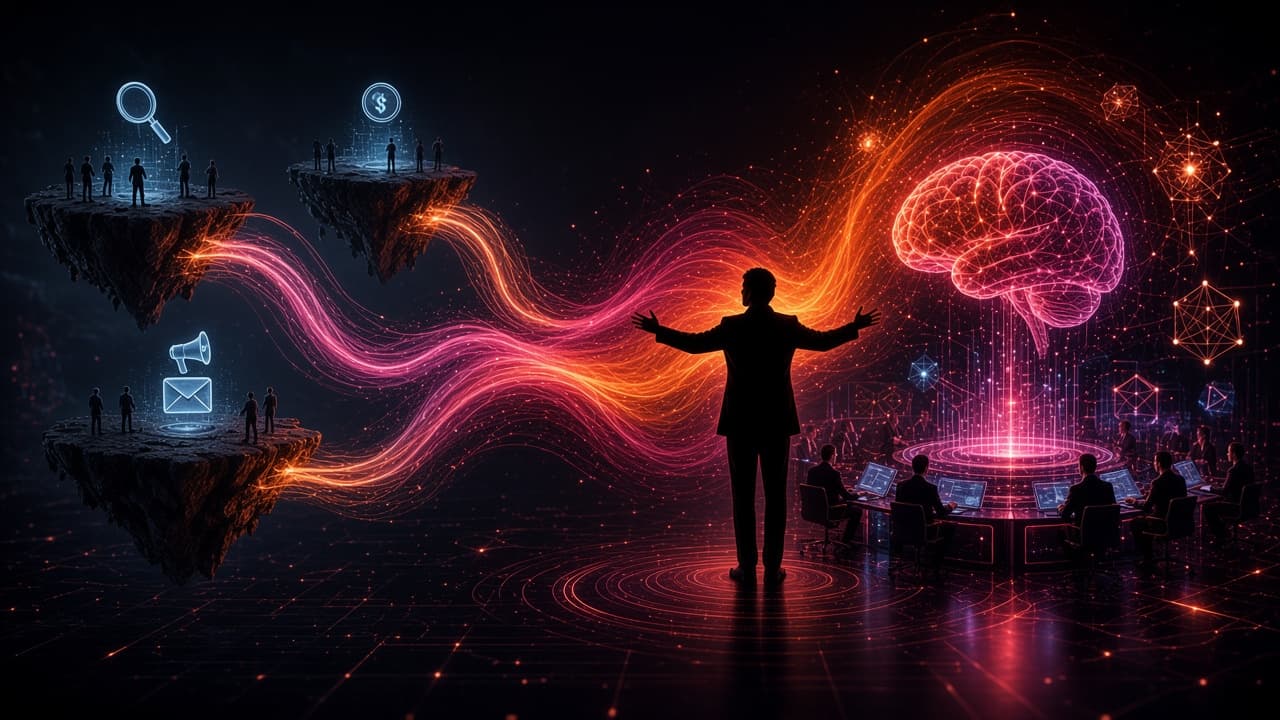
Marketing becomes adaptive rather than scheduled.
The Death of Manual Segmentation
Traditional marketing relies on predefined segments.
Age.
Location.
Interests.
Income.
AI does not need these rigid buckets.
It recognizes micro patterns across millions of interactions.
In the near future, segmentation will not be designed manually.
It will be continuously recalculated based on behavior, intent signals, and contextual data.
The result is hyper personalized marketing at scale.
Not personalization based on name insertion.
Personalization based on predictive modeling.
Attention Will Be Allocated by Algorithms, Not Marketers
In the early internet era, marketers decided where to place budgets.
Today, algorithms increasingly decide.
As AI systems grow more autonomous, media buying becomes less manual and more probabilistic.
AI already determines:
Which creative to show
Which audience to prioritize
Which bid to place
Which time to serve
The strategic role of marketers moves upward.
From tactical execution to systems architecture.

The Rise of Generative Interfaces
Search is changing.
Consumers are no longer only scanning lists of links.
They are interacting with generative interfaces that synthesize information.
When a user asks an AI system for recommendations, the system does not show ten blue links.
It generates an answer.
This shifts competition from ranking positions to being embedded within AI generated responses.
Brand visibility becomes entity based, not page based.
Marketing must adapt to influence how AI understands categories, brands, and authority.
Creative Becomes Infinite but Differentiation Becomes Scarce
AI enables rapid content creation.
Copy.
Visuals.
Video.
Voice.
The barrier to producing marketing material collapses.
But abundance creates noise.
When content production becomes effortless, strategic clarity becomes the differentiator.
The brands that win will not be those producing the most content.
They will be those producing the clearest narrative.
AI increases output.
But it also increases competition for cognitive space.
Data Becomes a Strategic Asset, Not a Reporting Tool
Historically, data was retrospective.
Campaign reports were reviewed after execution.
AI transforms data into real time decision infrastructure.
Predictive lifetime value models.
Churn prediction systems.
Dynamic pricing adjustments.
Behavioral scoring.
Marketing becomes a live optimization engine.
Companies that treat data as operational intelligence rather than reporting history will outperform.
Trust Becomes the Ultimate Currency

As AI generates more content and synthetic media increases, trust becomes fragile.
Consumers will question authenticity.
Verification signals, transparency, and consistency will matter more than ever.
Brands that maintain clear identity and coherent messaging across platforms will have an advantage.
AI amplifies everything.
Including doubt.
The Economics of Marketing Will Shift
Customer acquisition cost has risen steadily over the past decade.
AI has the potential to rebalance efficiency by improving targeting precision and creative testing speed.
However, it also increases competitive density.
More players can enter markets faster.
This means strategic clarity will determine margin sustainability.
The companies that use AI merely to reduce cost will survive.
The companies that use AI to redesign customer journeys will dominate.

Marketing Teams Will Change Structure
The marketing department of the future will look different.
Fewer manual executors.
More systems thinkers.
More analysts.
More integration architects.
AI does not remove the need for marketers.
It raises the intellectual requirement.
Strategy becomes more valuable than execution.
The Long Term View
Over the next decade, marketing will evolve from campaign management to behavioral orchestration.
From keyword targeting to contextual modeling.
From manual planning to autonomous adaptation.
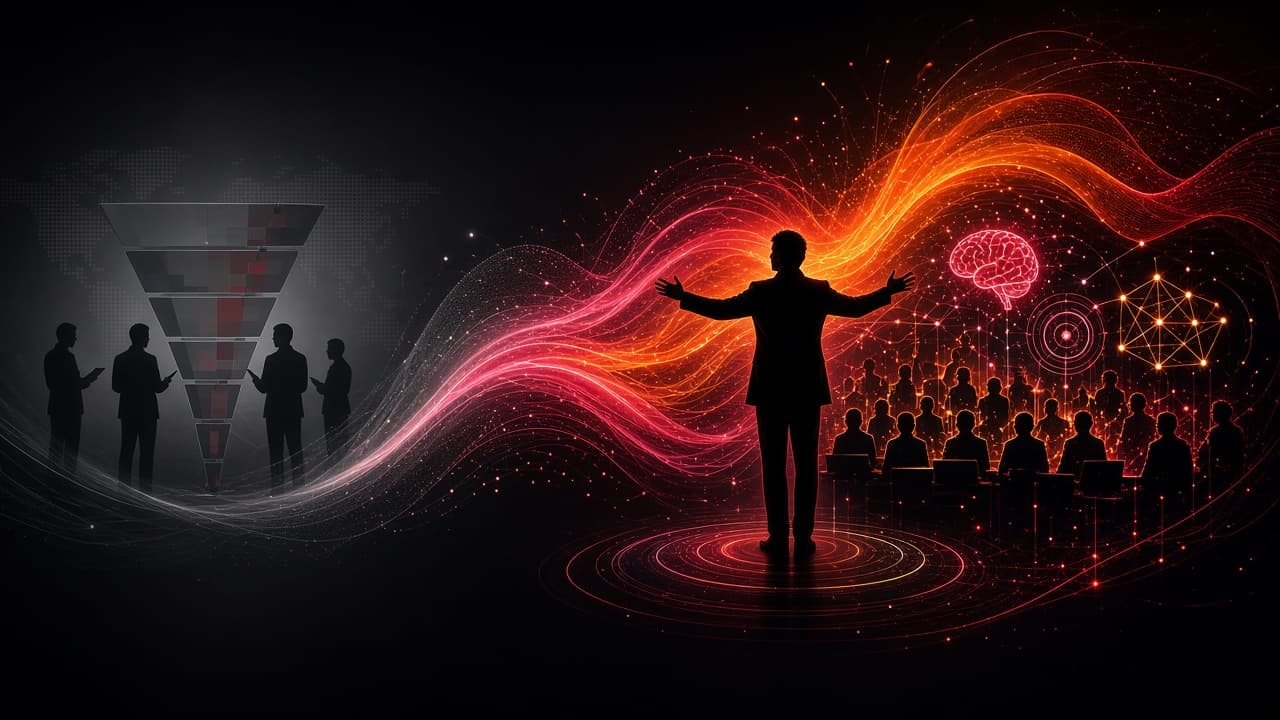
From static funnels to dynamic ecosystems.
AI does not eliminate human influence.
It amplifies strategic decisions and punishes weak ones faster.
The Core Question
The future of marketing is not about adopting AI tools.
It is about redesigning marketing around intelligence.
The question leaders must ask is:
Are we layering AI on top of old structures
Or are we rebuilding our marketing architecture around it
The first approach increases efficiency.
The second transforms capability.
Final Thought
Artificial intelligence will not make marketing easier.
It will make it more demanding.
Clear positioning will matter more.
Systems thinking will matter more.
Data discipline will matter more.
Trust will matter more.
AI will not replace strategy.
It will expose the absence of it.
And in that exposure, the next generation of dominant brands will emerge.
Recent Post

Branding
Aesthetic Clinic Marketing Strategy 2026 | Complete Guide
NiV
Aug 20, 2024

Design
DINDEU | Growth Infrastructure & Marketing Agency
Sophia Reyes
Sep 3, 2024

UI Systems
UI UX Design for Small Business: What Actually Matters
NiV
Sep 21, 2024